
Passive income has a marketing problem. Yep, I said it!
Somewhere along the way it started to mean “money for nothing” – cash rolling in while you sip a drink on a beach, having done no work at all.
That version isn’t real. And chasing it is how a lot of people lose money.
But there’s a truer version of passive income that is absolutely worth building. So let’s be honest about what it actually is, how passive the common options really are, and whether it’s worth the effort.
What “Passive Income” Really Means
Passive income is money that doesn’t need you to trade your hours for it, at least not once it’s up and running.
That last part is the key – once it’s up and running. Almost every passive income stream asks for something upfront first: your money, your effort, or both. The “passive” part comes later, on the back end.
So here’s a cleaner way to think about it. Active income is you working for money. Passive income is your money, or your past work, working for you.
The Myth vs the Reality
The myth is that passive income is effortless from day one.
The reality is that it’s front-loaded. You do the work, or put up the capital, at the start – and the payoff arrives later, often for years, without much more from you.
Think of it like planting a tree. There’s real work in the planting, and a wait before there’s any shade. But once it’s grown, it shades you every summer without you lifting a finger.
That’s what good passive income looks like. Effort now, ease later. Not no effort, ever.

Every Passive Income Needs Time or Money (Usually Both)
Here’s the rule that cuts through the hype: you pay for passive income in one of two currencies, and often both.
- Money – You put capital you already have to work. Buy dividend-paying shares or a rental property and the income can be fairly hands-off. But you needed the money first.
- Time – You build something once that keeps paying. Write a course or a book and it can sell for years. But the building is real work, and most of it is unpaid at the start.
If someone offers you passive income that needs neither your money nor your effort, be careful. That’s usually the setup for a sales pitch, not a strategy.
So How “Passive” Are the Common Options, Really?
Passive income isn’t one thing – it’s a spectrum. Some options are close to hands-off, others are a part-time job in disguise.
- Dividend shares and ETFs – Among the most genuinely passive, once you’ve done the learning and bought them. I’ve held shares for twenty plus years that pay me without any day-to-day effort.
- Rental property – Semi-passive. The rent arrives without you working for it, but tenants, maintenance and the occasional 2am phone call come with it, unless you enage a manager to take those calls. I highly recommend you do.
- Digital products and courses – Passive on the back end, but very active to create. The income can last for years; the making of it is real work.
- High-interest savings and bonds – Truly passive, but usually the lowest return, so more of a parking spot than a wealth builder.
I go through 15 of these in detail, with the capital, effort and risk of each, in my full guide about passive income in Australia. This piece is just about setting your expectations straight first.
So Is It Worth It?
Yes – for most people, building some passive income is well worth it. Just not for the reason the ads suggest.
It’s worth it because the effort is front-loaded.
You do the work once, or invest the capital once, and it keeps paying while you get on with your life. Over the years that income can compound into real freedom – the ability to work because you want to, not because you have to.
That’s a very different promise from “money while you sleep, starting tomorrow”. It’s slower, it’s more real, and it actually works.
How to Start, Without the Hype
If you want to build passive income the honest way, the order matters.
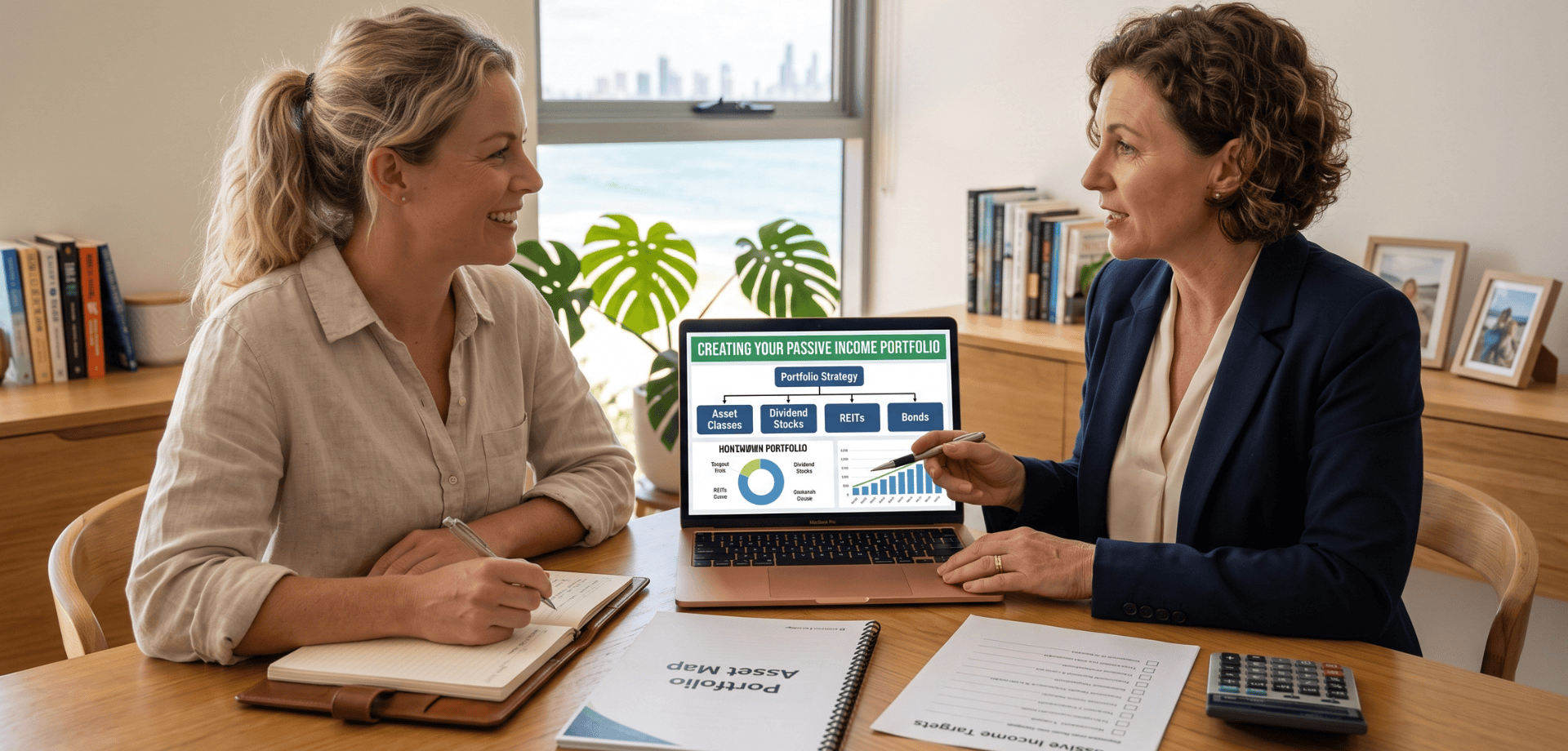
First, get your foundations and money mindset right, because passive income is built on surplus and patience. Then learn how the options actually work, so you can pick ones that suit your situation. Then start small, and let time do the heavy lifting.
None of that needs a big lump sum or a secret. It needs a plan and a bit of patience. If you’d value a hand building one, that’s what financial coaching is for.
In Summary
Passive income isn’t money for nothing. It’s income you set up with effort or capital now, that keeps paying with little input later.
Some options are close to hands-off, some are a part-time job wearing a disguise, and the honest ones all ask for your time, your money, or both. Get past the myth, pick the options that fit you, and start – that’s how passive income actually gets built.
Which kind of passive income appeals to you more – the money kind, or the time kind?
P.S. Before you build income on top of it, it helps to know your numbers. Grab my free Wealth Tracker to see where your money’s going – the surplus you find is the seed for everything passive.
Book your free Smart Investor Call and let’s start growing your wealth – one smart step at a time.
