
Smart Debt is not about loving debt. It is about using the right first move so you do not get stuck for years.
The story we get sold about debt
Most people hear one loud message: debt is bad, so pay it off fast. It sounds simple, maybe even brave. It also sounds like the only “good” choice.
But life is not a neat math problem. You are not a robot. You need food, safety, sleep, and a plan that works even when life gets messy.
Here is the trap. Conflicting narratives about debt keep people stuck. One side says, “Kill all debt now.” The other side says, “Debt is fine, just invest.” People bounce between the two and do nothing well. They feel shame, then they feel confused, then they feel tired.
Smart Debt thinking replaces shame with clear choices. The goal is not to win an argument. The goal is to build a life where money stops yelling at you.
Why “pay off debt first” can backfire
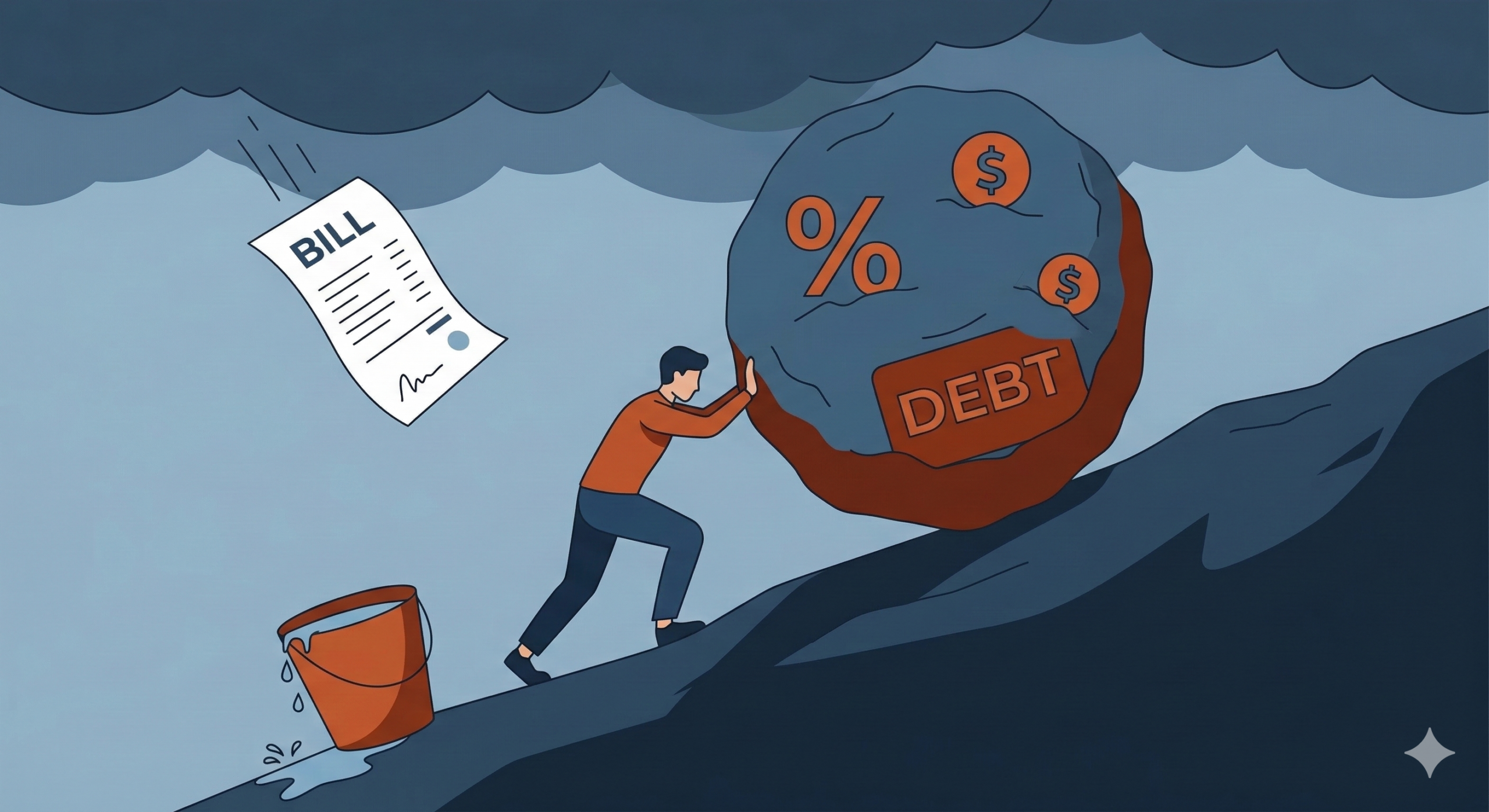
Paying off debt first can be the wrong move when it makes you fragile. Fragile means one small problem becomes a big crisis.
If you throw every spare dollar at debt, but you have no buffer, what happens when the car breaks down, the kid gets sick, or the job cuts your hours. You go back to the credit card. You feel like you failed. Your debt goes up again. That is not a character problem. That is a strategy problem.
It can also backfire if you stop the habits that help you build wealth. For example, if you pause super contributions, stop investing, or ignore upskilling, you might lose years of growth. Time is powerful. Losing time is expensive.
Smart Debt is about sequencing. Sometimes the best first move is not “debt down.” Sometimes the best first move is “stress down.” When your stress is down, you make better choices and you stick with them.
The context test: what kind of debt is it
Not all debt is the same. The interest rate, the terms, and the risk all matter. Also, how you feel matters, because stress changes behaviour.
Here is a simple context test you can run.
Ask, “Is this debt high cost and high risk, or low cost and controlled.” High cost and high risk debt includes things like payday loans and high interest credit cards. Low cost and controlled debt might include a home loan you can afford with a steady income.
Ask, “Is the debt growing, or shrinking.” If the balance grows even when you try hard, something is leaking in your budget, or your income is too tight for the plan.
Ask, “Does this debt block my next step.” If a repayment is so big that you cannot save even a small buffer, that debt is controlling you.
Smart Debt does not label you as good or bad. It labels the situation as safe, risky, or urgent.
Smart Debt priorities that often beat the old rule
Let’s talk about tradeoffs. You always trade one thing for another. The key is to trade on purpose.
Below is a simple way to see what you might do first, depending on your situation.
| Situation | Why it matters | Often a better first move |
|---|---|---|
| No emergency savings | One surprise pushes you back into debt | Build a small buffer, then attack debt |
| Debt has very high interest | Every month costs a lot | Pay this down fast, even before investing |
| Income is unstable | You need flexibility to avoid panic choices | Stabilise income, then set repayments |
| Mental load is high | Stress makes plans fall over | Simplify bills, automate, then repay |
| You have employer match or big tax benefit | You may lose free money or strong returns | Contribute enough to capture the benefit |
None of this is permission to ignore debt. It is permission to stop using guilt as your plan.
Smart Debt is a framework. It asks, “What is the move that makes my future moves easier.” That is the whole game.
A practical example: buffer first, then smash debt
Meet Jess. Jess has a credit card at a high rate. She also has zero savings. Every time she tries to pay extra, something happens and she swipes the card again. She feels like she is in quicksand.
The old rule says, “Pay the card off first.” Jess tries and fails, then feels hopeless.
The Smart Debt approach says, “Build a small buffer first.” Jess saves a starter buffer, even if it is just a small amount each payday. Now when the car needs tyres, she uses cash, not credit. The card stops growing.
Then Jess sets a clear repayment plan. She pays the minimum, plus an extra amount that is realistic. She also cuts the card up or lowers the limit. Now the debt shrinks every month.
The win is not just the number. The win is control. Control creates calm. Calm creates consistency. Consistency is how people get out of debt for good.
When investing before debt makes sense
This is where people get spicy. Some folks get angry if you invest before paying off all debt. But again, context matters.
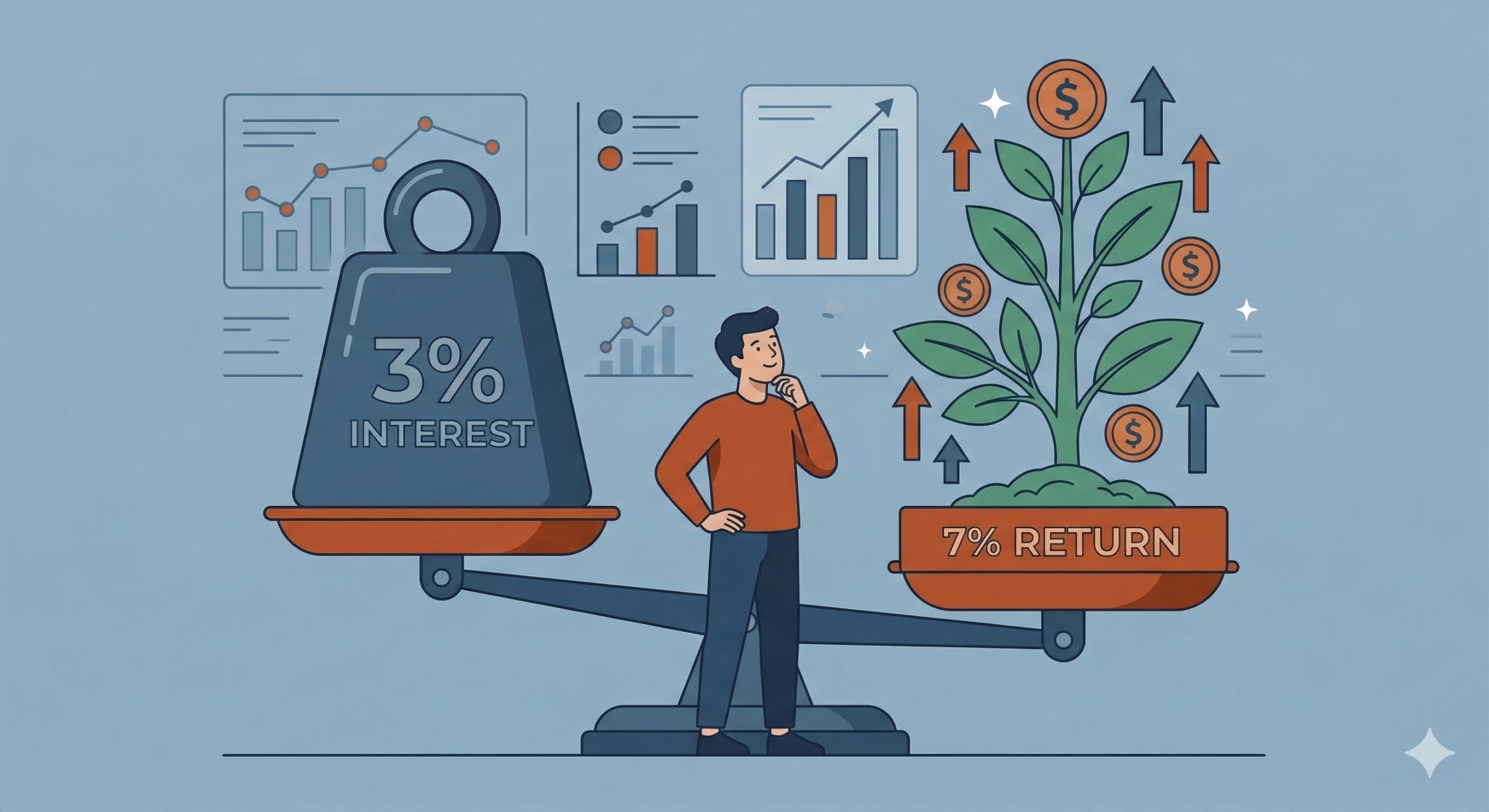
If your debt is low interest and stable, and you have a buffer, and your cash flow is steady, investing can be the smarter first move, or at least an equal move.
Why. Because time in the market matters. Also, some opportunities are rare. If your employer offers extra super contributions or matching, skipping it can mean missing out on free money. If you have a career skill that raises your income, paying for training can beat paying extra on low interest debt.
This is not a vibe. It is math plus behaviour. The best plan is the one you can follow for years.
Smart Debt means you choose the mix that keeps you progressing without feeling like you are drowning.
The three-step sequence that keeps people moving
Most people do better with a simple sequence. Not perfect. Simple.
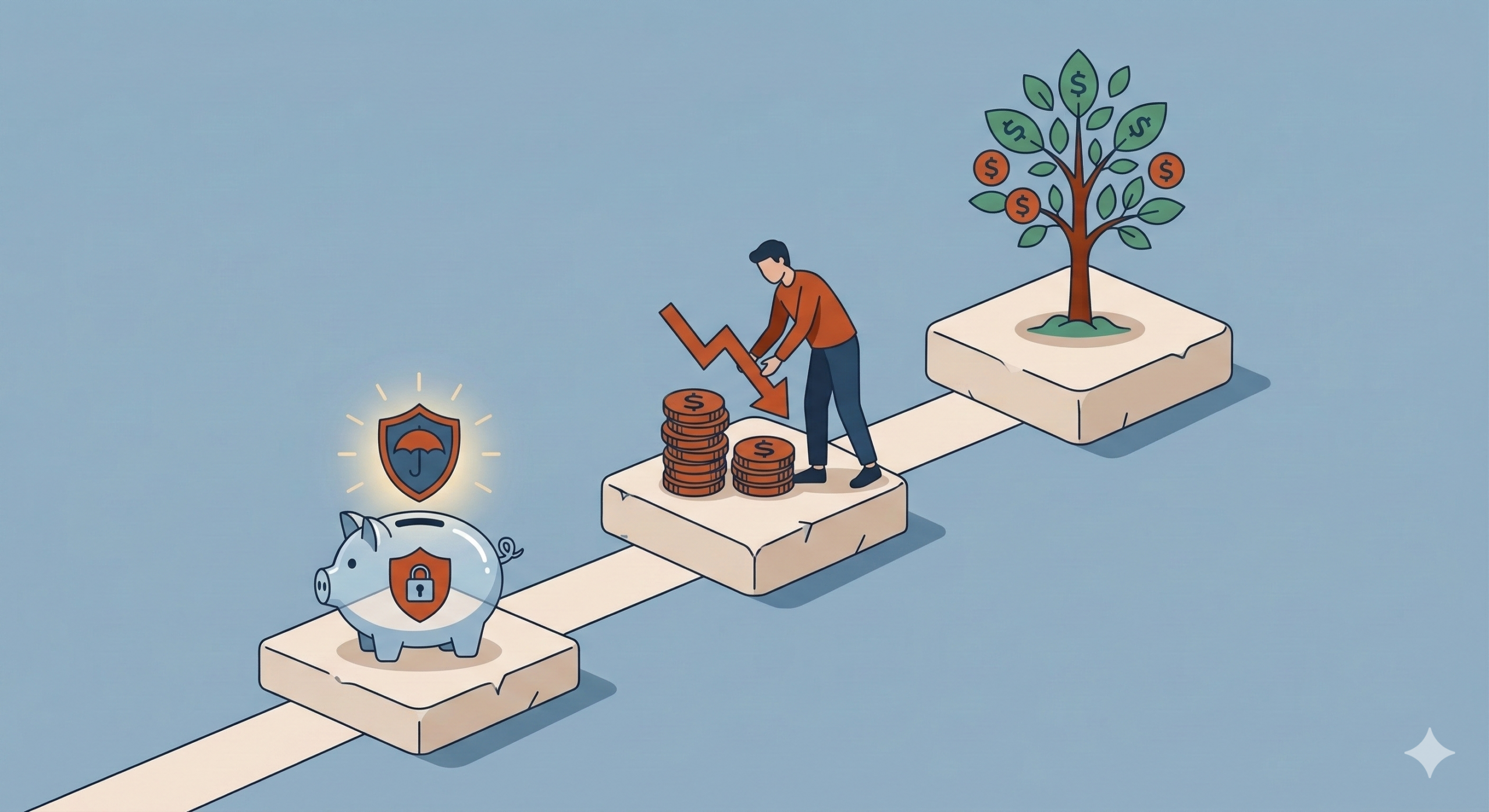
Step one is to stop new debt. That might mean moving to cash for daily spending, lowering limits, or setting up bill automations.
Step two is to build a starter buffer. This is not a big emergency fund yet. It is a small shield so life does not punch you back into debt.
Step three is to choose your attack plan. You can focus on the highest interest first, or the smallest balance first for quick wins. Pick one. Stick with it.
Then, once the debt is shrinking, you expand. You grow the buffer into a real emergency fund. You invest consistently. You keep learning skills that raise income.
This is what Smart Debt looks like in real life. It is not dramatic. It is steady. It is a plan that survives bad weeks.
How to decide your first move today
If you feel stuck, it is usually because your plan is fighting your reality. So let’s bring reality into the plan.
Start with one question: “What is the biggest thing that could knock me off track this month.” If the answer is a surprise bill, build the buffer first. If the answer is brutal interest, target that debt first.
Next question: “What would make me feel 20 percent calmer.” Often it is as simple as having one account for bills, one for spending, and one for savings. Calm systems beat heroic motivation.
Last question: “What is the smallest action I can repeat weekly.” A tiny action done weekly beats a big action done once.
Smart Debt is not about being perfect. It is about being consistent. If you pick the right first move, you stop the cycle of guilt and relapse. You start building financial freedom the way it is built in the real world, one steady step at a time.
Book your free Smart Investor Call and let’s start growing your wealth—one smart step at a time.
