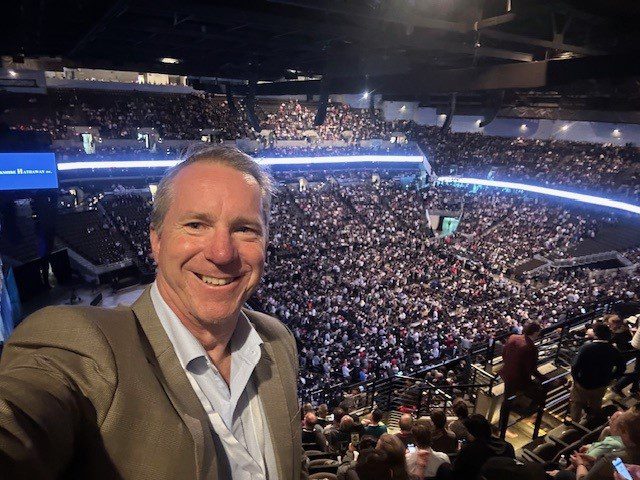
In May 2024, my wife Jodie and I flew to a small city in the American Midwest to watch a 93 year old man answer questions for six and a half hours.
The man was Warren Buffett, the city was Omaha, and the six and a half hours were the Berkshire Hathaway annual meeting – a pilgrimage that tens of thousands of investors make every year.
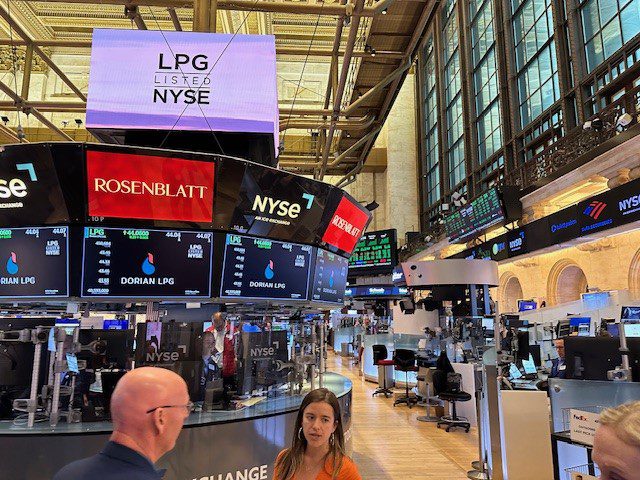
It was a bucket list trip. On the same journey we stood at the closing bell on Wall Street, rang in the opening bell at the Nasdaq, and spent time in Chicago and Boston. For someone who loves the share market as much as I do, it was a week I’d wanted for years.
But the lesson I brought home wasn’t the one I expected. It had very little to do with picking stocks.
Why Buffett, and Why Travel So Far
I’d been learning from Warren Buffett for a long time before I ever saw him in person.
Years ago, when I hit a wall with property and moved my surplus into shares, it was his approach I leaned on – studying companies by hand, looking for good businesses at fair prices, and holding them for the long term. If you want the practical side of what Warren Buffett teaches, I’ve written that up separately.
He has since handed the day to day running of Berkshire to his successor, Greg Abel, and stayed on as chairman, although that ends this year too. But the principles he’s spent a lifetime repeating haven’t changed, and they’re almost boringly simple.
Buy quality. Think in decades, not days. And as he famously put it, “be fearful when others are greedy and greedy when others are fearful.”
None of that is complicated. That’s rather the point.
The Real Lesson Was How I Got There
It struck me somewhere over the Pacific on the way home.
The trip wasn’t really bought with the money I’d made in the market. It was bought years earlier, with a decision made on the end of my bed.
Because the version of me that sat opening a pile of bills one evening – realising they added up to more than I earned that month, wondering how I’d tell Jodie – could never have taken that trip. It wasn’t a lack of income that was stopping him. It was the lack of a system.
Everything that made Omaha possible started the day I decided to fix that. I learned to manage our money, paid myself first, and slowly began to build wealth across property and then shares. None of it was exciting. It was a series of ordinary, repeated decisions.
And that’s the quiet irony I keep coming back to. The exciting life – the bucket list trips, the freedom to go – is funded almost entirely by boring habits. The boring is what buys the interesting.
What Wealth Is Actually For
Standing in that arena in Omaha, I wasn’t thinking about my net worth. I was thinking about the fact that I was there at all.
For a long time I measured progress by a number. Hitting $1,000,000 in net worth at 38 felt enormous at the time. But the number was never really the goal. It was always a means to something else – choice. And choice is why I say money mindset is such an important part of the journey.
That trip was choice. So was travelling through Europe with Jodie earlier this year, from Budapest to the coast of Italy. These aren’t a reward I’m waiting to collect at 67. They’re the whole reason for the plan, being lived now.
This is the part the finance world rarely talks about. We obsess over returns and strategies and the perfect investment, and forget to ask what it’s all for. For me the answer is simple. It’s the ability to do the things that matter to you, with the people who matter, while you’re young enough to enjoy them. That’s what financial independence really buys.
What This Means for You
You don’t need to fly to Omaha, and you certainly don’t need a Buffett sized fortune, to get the part that matters.
The freedom he’s built is extreme, but the principles underneath it are available to anyone. Spend less than you earn. Invest the difference in good assets. Be patient, let compounding do the heavy lifting, and don’t panic when the market has a bad week – that’s usually when the calm investor quietly does well.
That’s it. It’s not thrilling, and it’s not meant to be. The thrill comes later, in the life the system pays for.
If you’ve been waiting for a more exciting answer before you start, I’d gently suggest the boring one is the answer. The best time to begin was years ago. The second best is this week, and you don’t need permission or a perfect plan – just a first step. If you’d like a hand building the roadmap, that’s what financial coaching is for.
In Summary
I flew halfway around the world to learn something I could have written on a napkin: build wealth with patience and good habits, and use it to live a life that’s actually yours.
Warren Buffett’s genius is real, but the lesson I brought back from Omaha wasn’t about being a genius. It was that ordinary, consistent decisions, repeated for years, buy extraordinary freedom. The boring habits fund the interesting life.
If money were no object, what’s the one thing you’d want the freedom to do?
P.S. The trips and the freedom all trace back to one unglamorous first step – knowing your numbers. Grab my free Wealth Tracker and complete it this week. It’s the same place my whole journey started.